All the classes start each day with a karakia (prayer) and a hīmene (hymn) in te reo Māori, the Māori language.
This is the karakia which they say first in te reo, then in English:
in te reo Māori:
Kia hora te marino
Kia whakapapa pounamu te moana
Hei huarahi mā tātou i te rangi nei
Aroha atu, aroha mai
Tātou i a tātou katoa
in English:
May peace be widespread
May the sea glisten like greenstone
A pathway for us all this day
Give love. Receive love.
Let us show respect for each other.
I love this karakia! And it is so cool to hear the kids saying it. I decided that when we start home schooling we will begin with the karakia each day. The kids also practice the kapa haka every Wednesday afternoon. Kapa haka means Māori performing arts, kapa means to form a line, and haka to dance. Kapa haka involves an emotional and powerful combination of song, dance and chanting.
The kids are loving school. Riki and I are also super happy with the school. One big difference from schools in the United States is that there is an outdoor pool at their school. The kids get to swim during the school day when the weather is nice, as part of the curriculum.
Students start school in New Zealand at the beginning of the term after their 5th birthday, instead of all at the beginning of the school year, in February. Some move up to the next grade after only 1 term, depending on how they progress. There are 4 terms a year, with a 2 week break between each term, and a 6 week summer holiday (Dec 21st – February 6th this year).
Luz’s class has year 0 and year 1 students. Her class has 18 students with one teacher and one teacher’s aide.
Jade’s class has year 2 and year 3 students. She has 44 kids in her class, with 2 teachers and one teacher’s aide. Tomu’s class also has 44 kids, in years 5 and 6, but with 2 teachers and two teachers’ aides.
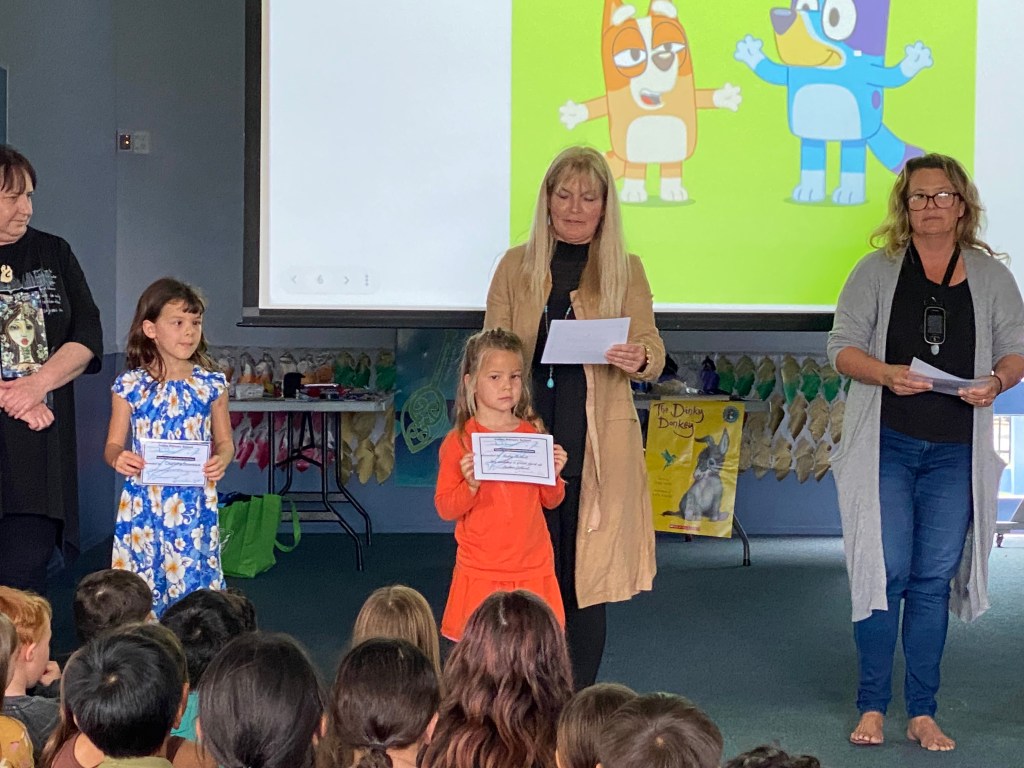
There is a whole school assembly every Friday (families always welcome), where a different class leads the assembly and showcases their learning. Teachers give out 2 certificates each to highlight students’ progress. At the assembly, they also draw names from the Caught Being Good box. Other students and teachers can fill out the Caught Being Good tickets to give someone kudos. Luz had her name drawn twice already, and was very happy with her chocolate bars.
Tomu got to go to a sleepaway camp for 2 nights and 3 days at Cooper’s Beach, further north from here. He had a great time!
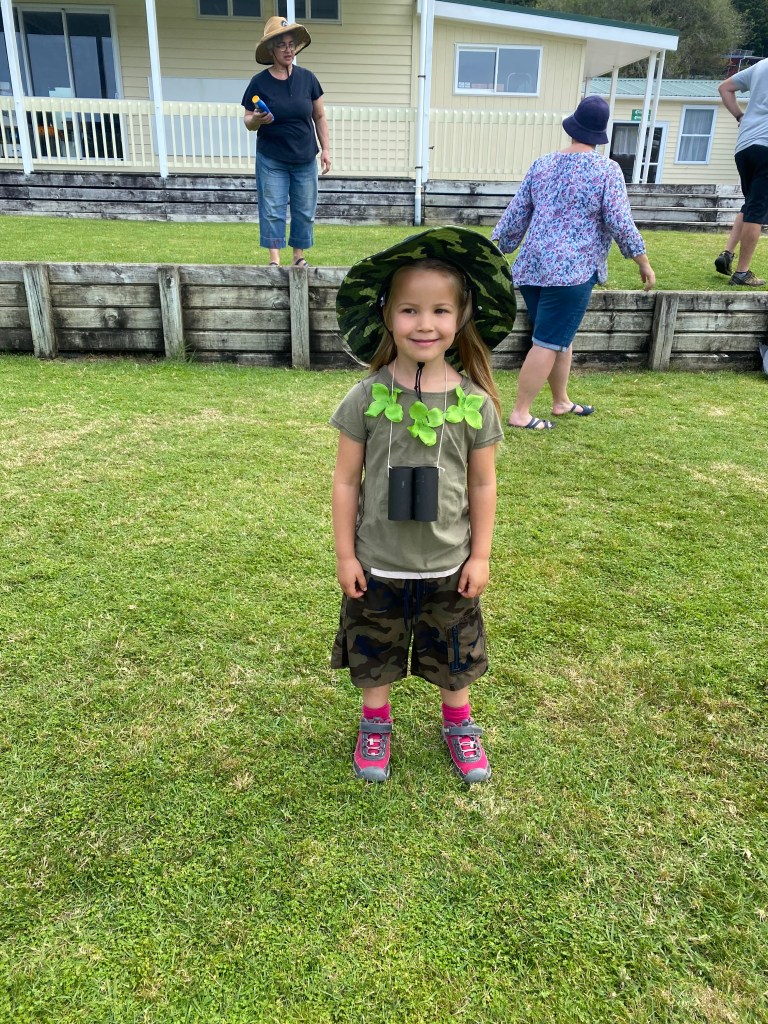
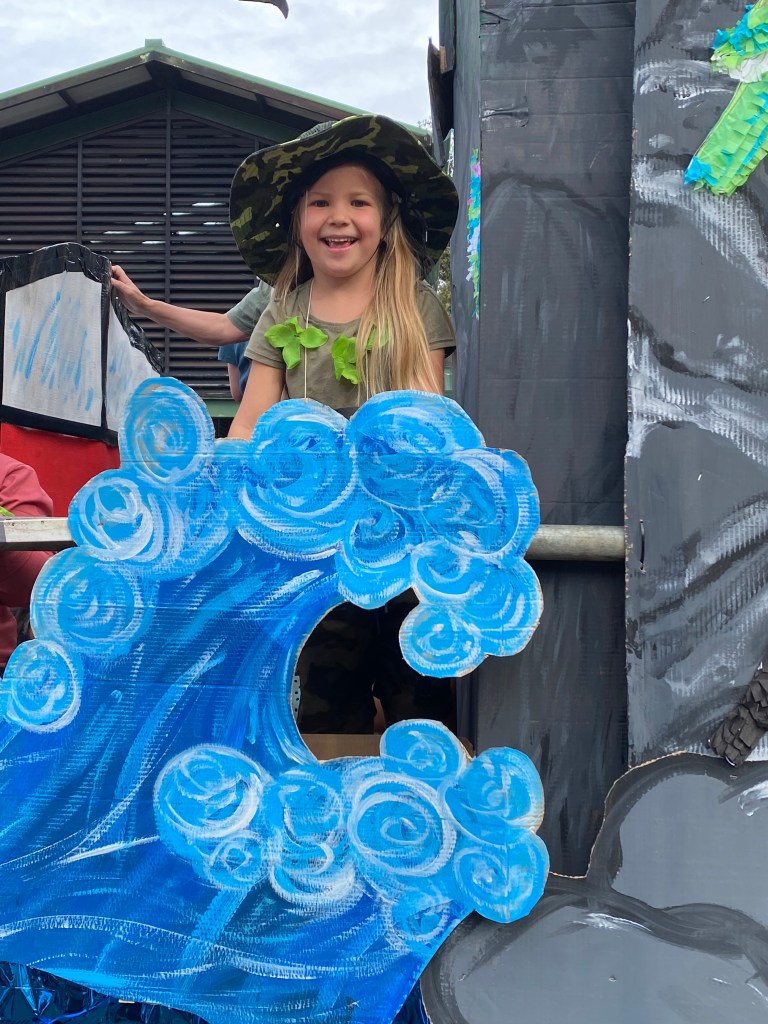
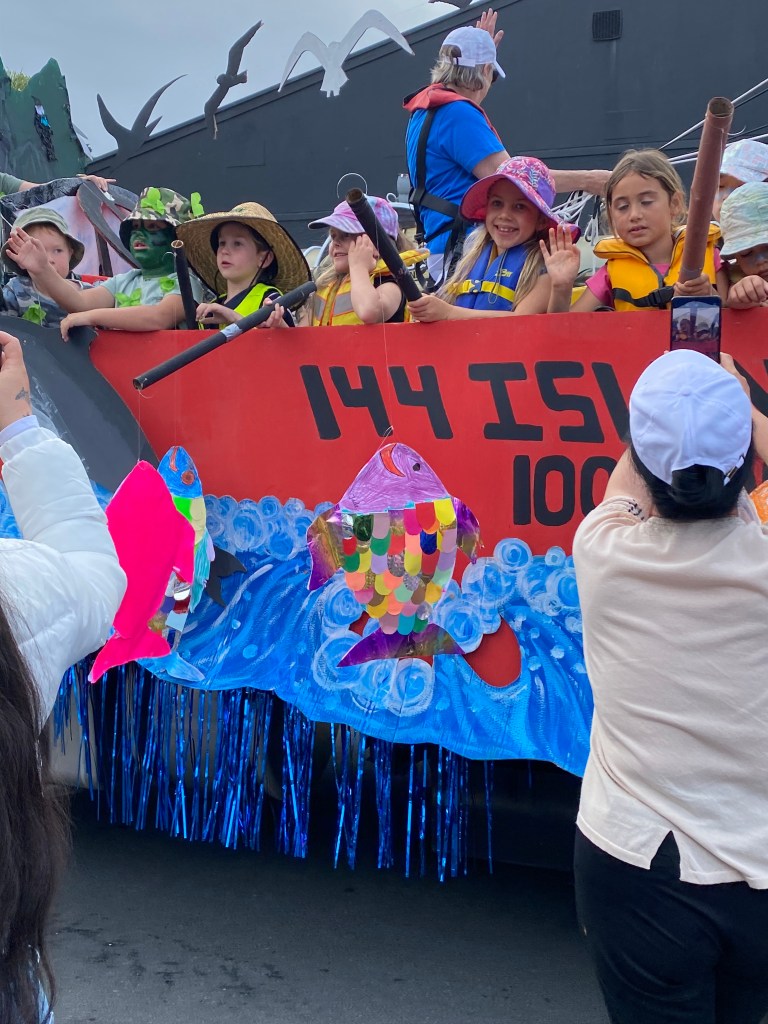
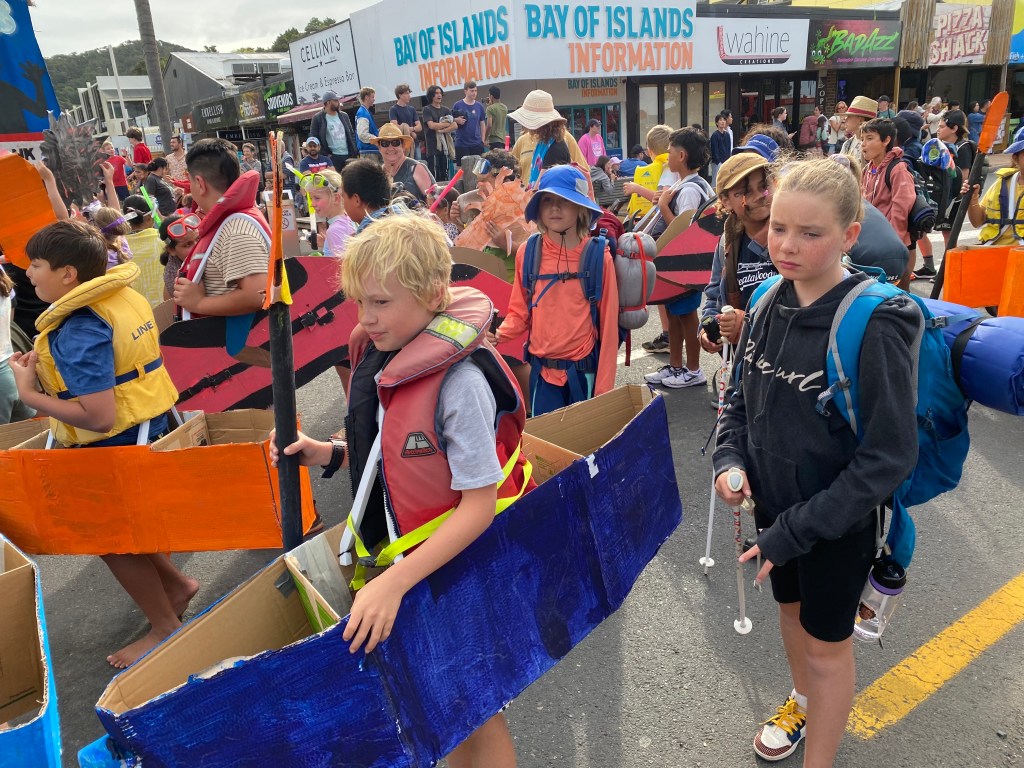
Last Friday there was a Christmas Parade in Paihia, and the school made a float. All three of our kids participated: Luz as a bird-watcher, Jade as a fisher-person, and Tomu as a hiker. Luz and Jade got to ride on the float. Riki and I volunteered for a few hours last Monday morning, working on the float.
And finally, yesterday I got to attend a special ceremony in the school Whare (or meeting house) in order to add Snow’s photo to the back wall, where the respected ancestors’ photos are hung. Snow was a carver, who carved the decorative hoe (paddles) on the wall of the Whare, and he had recently passed away. Sam shared about her father, Snow, that he lived in a house without running water or power, and that he loved to read. Every night he would read for 3-4 hours by candlelight. She encouraged the students that a love of reading was the best thing they could do for themselves to broaden their worldview and be intelligent.
The main speaker at the ceremony was Māori and had a cloak of feathers. The students sang various Waita (songs) and it was so cool to see Tomu doing all the motions and singing along (I was right behind him). The songs are so powerful and moving! I cried several times during the ceremony.
A main message from the ceremony was wanting more connection between the local marae (in Waitangi) and the school, and wanting the Paihia students to learn more about their Māori culture so that they can go to any marae and stand tall and say where they are from. A marae is a fenced-in complex of carved buildings and grounds that belongs to a particular iwi (tribe), hapū (sub-tribe) or whānau (family). Māori see their marae as their tūrangawaewae – their place to stand and belong.

 sv evi
Leave a comment