Sanne from SV Nebo organized a trip for us to visit the interior of Borneo. It was difficult negotiating the price with the tour agency that acted as the middleman, figuring out whether transport was included or not, and finding out what we needed to bring. We asked for a packing list, but didn’t hear back. In the end the company providing the tour, Orou Sapulot , gave us a discount for the kids’ price and included our transport.
Sanne, myself, and five kids set off from Kota Kinabalu on a Thursday morning at 8 am. We had only a one paragraph description to go on for what the 3 days and 2 nights tour would include. I was envisioning being hot and sticky with no air-con and lots of mosquitoes. After driving two hours, we met up with Jojo from Orou Sapulot over delicious drinks of kitchai ping — iced calamansi lime juice with a dried fruit in the bottom.
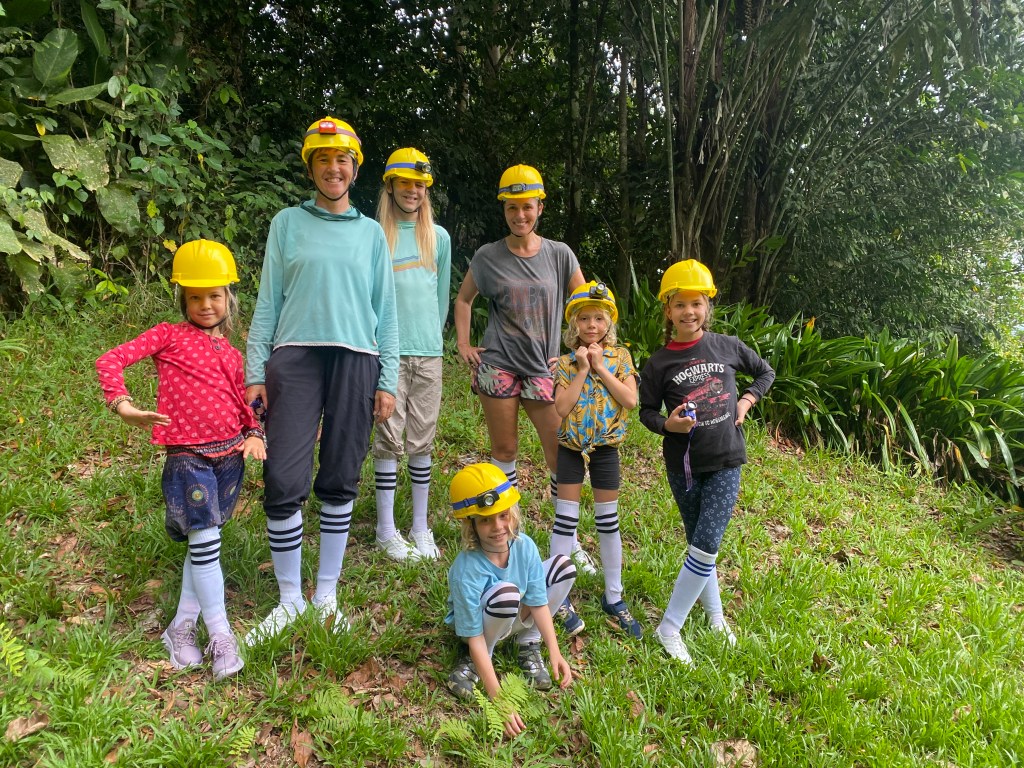
Jojo told us that we needed to buy Adidas kampung shoes or ‘Village Adidas’ shoes and long socks to protect our legs from leeches for the caving part. Also that we needed a headlamp for each person. Sanne and I just looked at each other, and laughed incredulously…this was going to be an adventure. We explained that we hadn’t gotten any packing list — Jojo was surprised by this. I showed her the paragraph from the brochure and explained this was all we knew about the tour. When she read that, she was quite frustrated. She said, “this brochure is two years old, and the tour has changed since then.” So both Orou Sapulot and us were frustrated with the agency who was the middleman, and who did a poor job transmitting information. No matter…we went shopping for the Adidas kampung and headlamps.
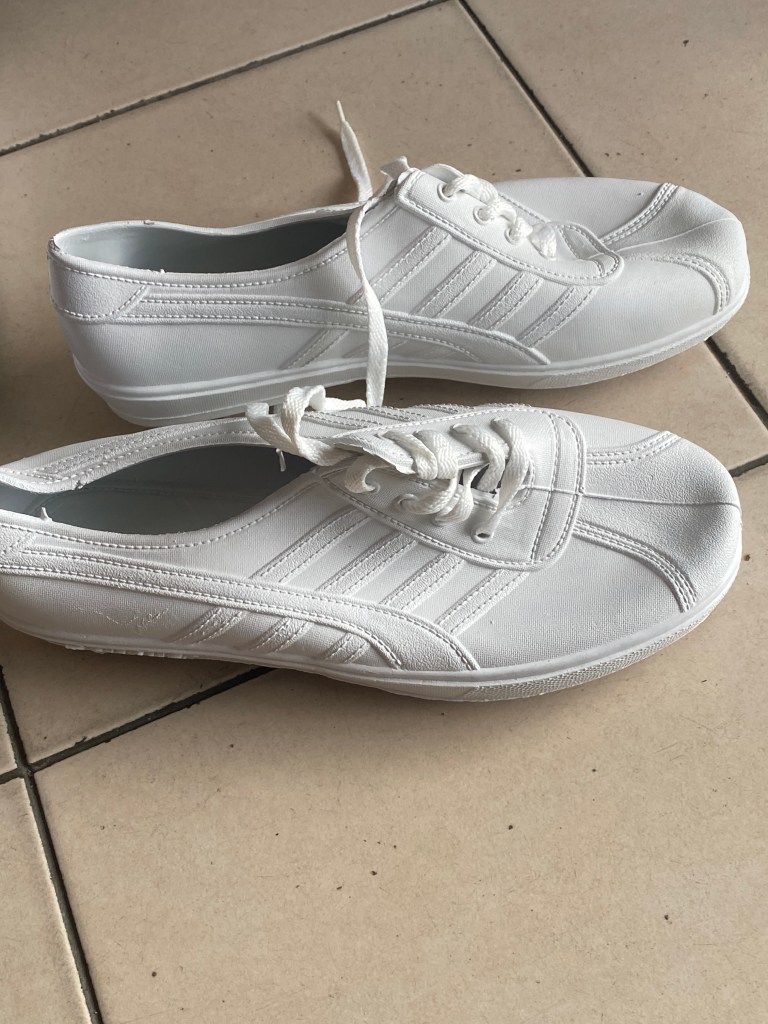
After shopping, we left Jojo and continued driving for another 90 minutes…arriving to have lunch at 2 pm. Good thing I packed a huge bag full of snacks!
We met Virgil, our guide, at the restaurant. Jojo told us that Virgil is the director of Orou Sapulot; Virgil insists that he just another member of the team, and that everyone involved in the ecotourism project are doing their part to showcase Murut culture, hospitality, and livelihood.
Virgil had long hair tied up in a bun. When he met Tomu and saw his long hair, he told us how the Murut people used to tie the long hair of the men they scalped to their machetes, as a status symbol. The Murut people are an indigenous Austronesian ethnic group, native to the interior region of northern Borneo. They are the third largest ethnic group in the state of Sabah, and they were the last ethnic group to renounce headhunting. They were headhunters until Virgil’s grandfather’s generation.
Virgil asked us in flawless English how adventurous of eaters we were…did we want to try the eels swimming in the tank? Errr…we passed on the eels. Sanne and I both felt relieved after meeting Virgil — this was going to be a fabulous trip after all.
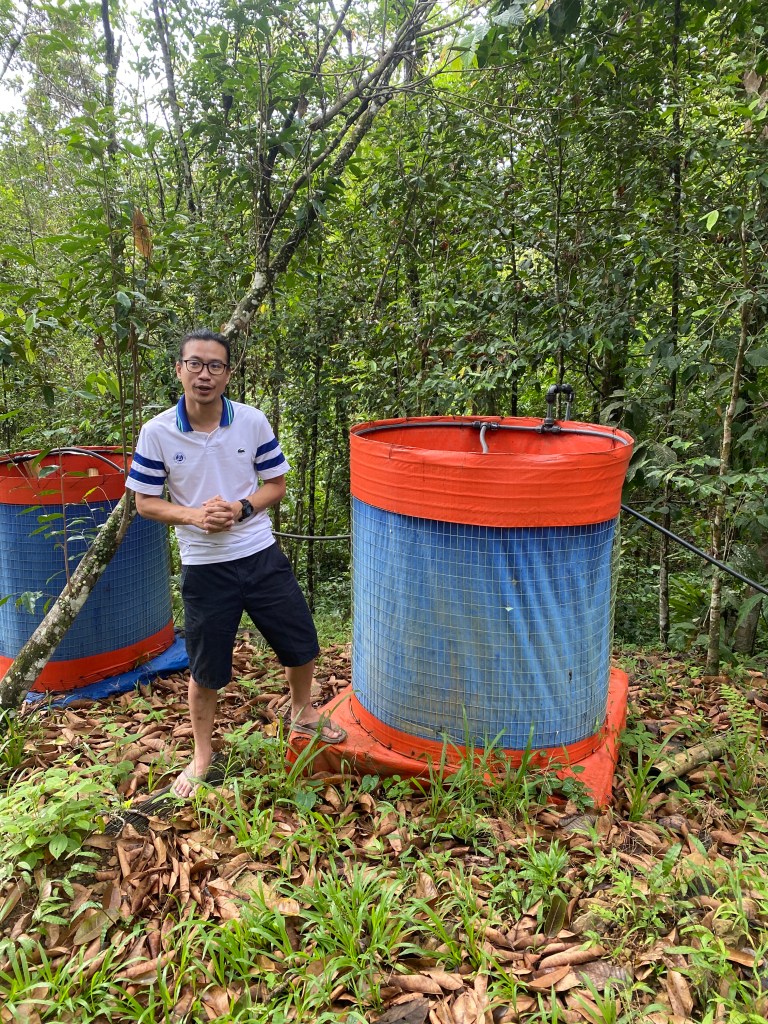
After a delicious lunch, we drove some more — this time in two four-wheel-drive vehicles. After walking for about ten minutes, we loaded into narrow boats.
Next it was time to get geared up for the caving adventure.
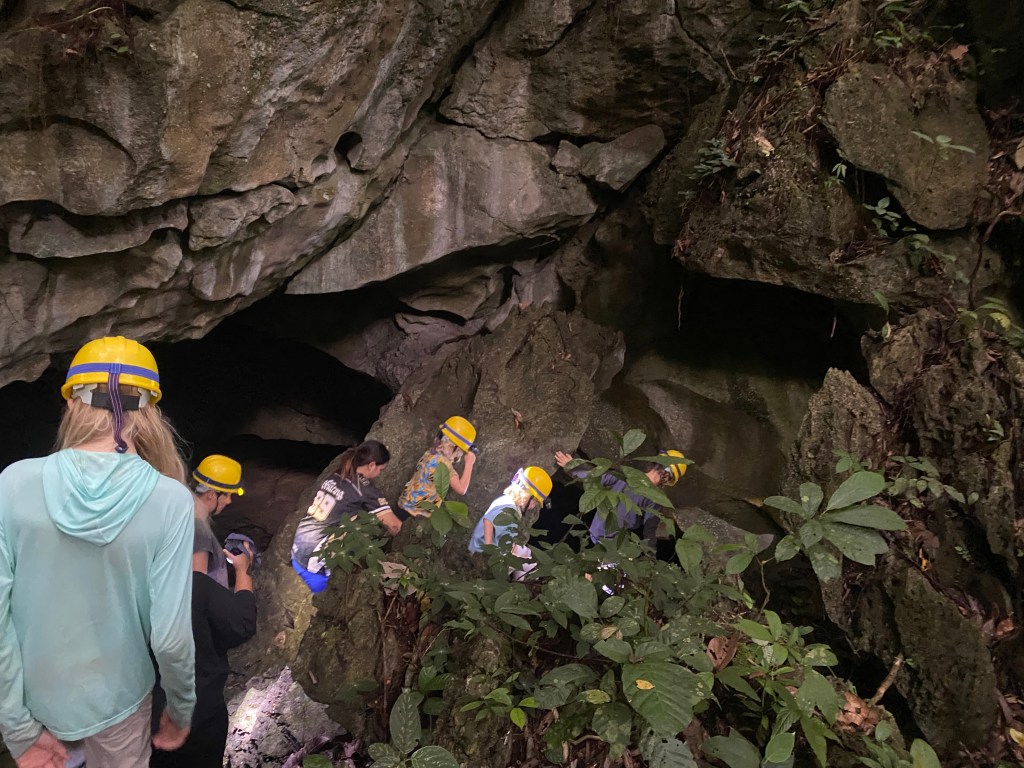
After a short hike, we entered the cave with four guides to accompany us.
We quickly saw some creepy crawly things!
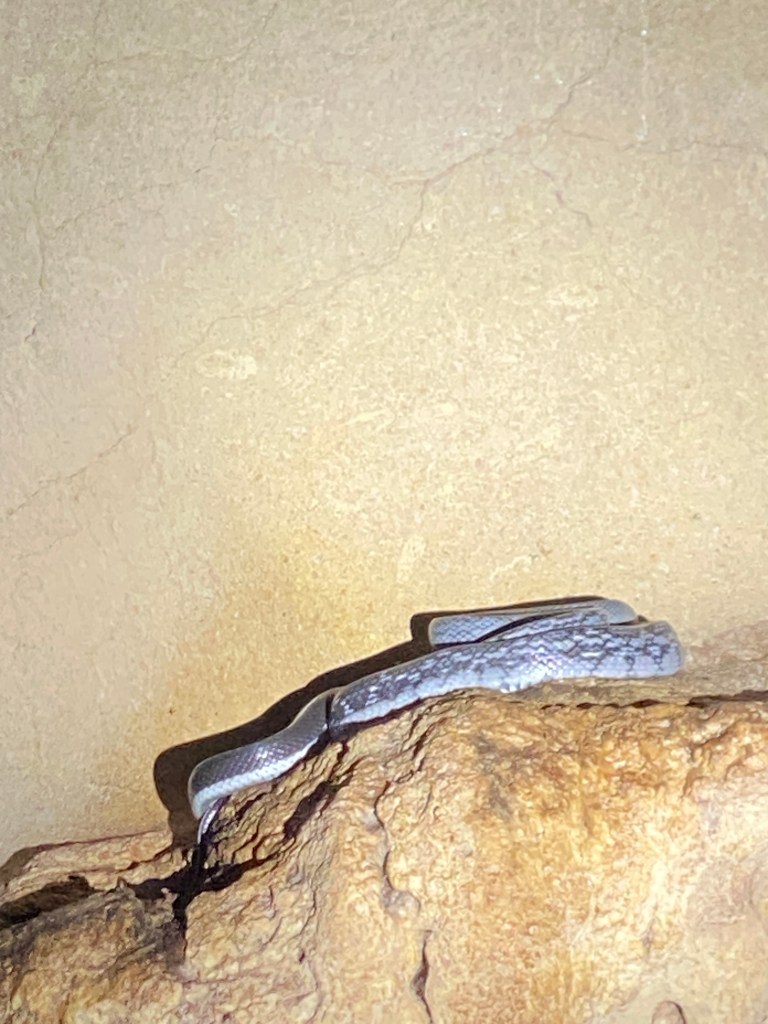
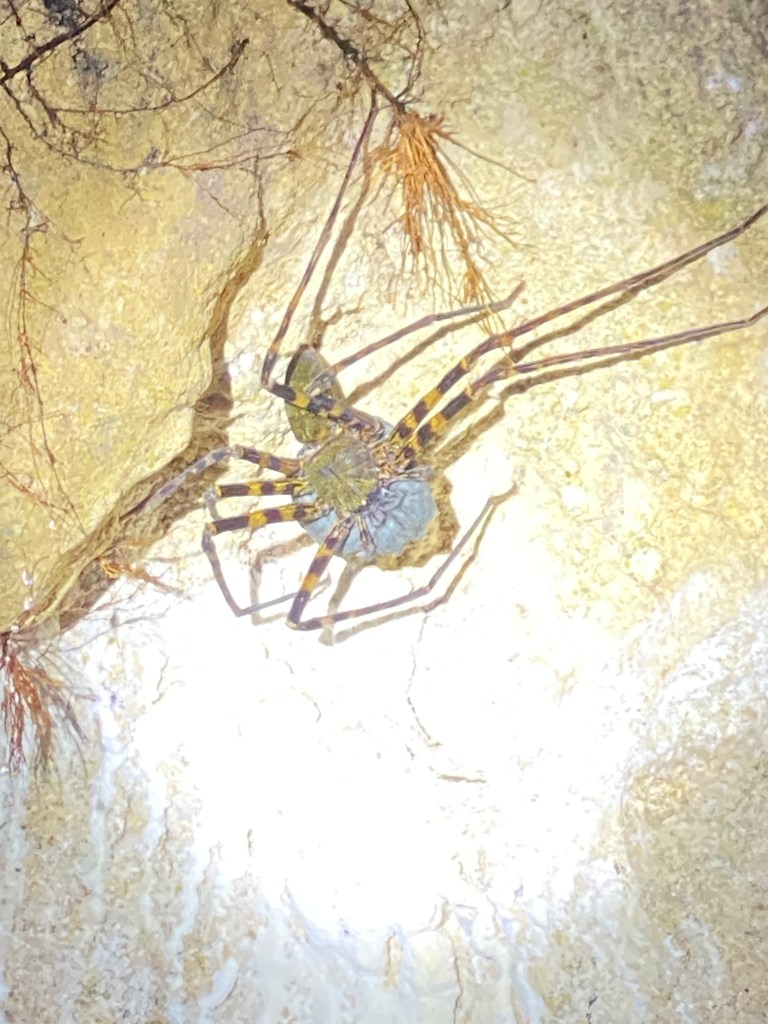
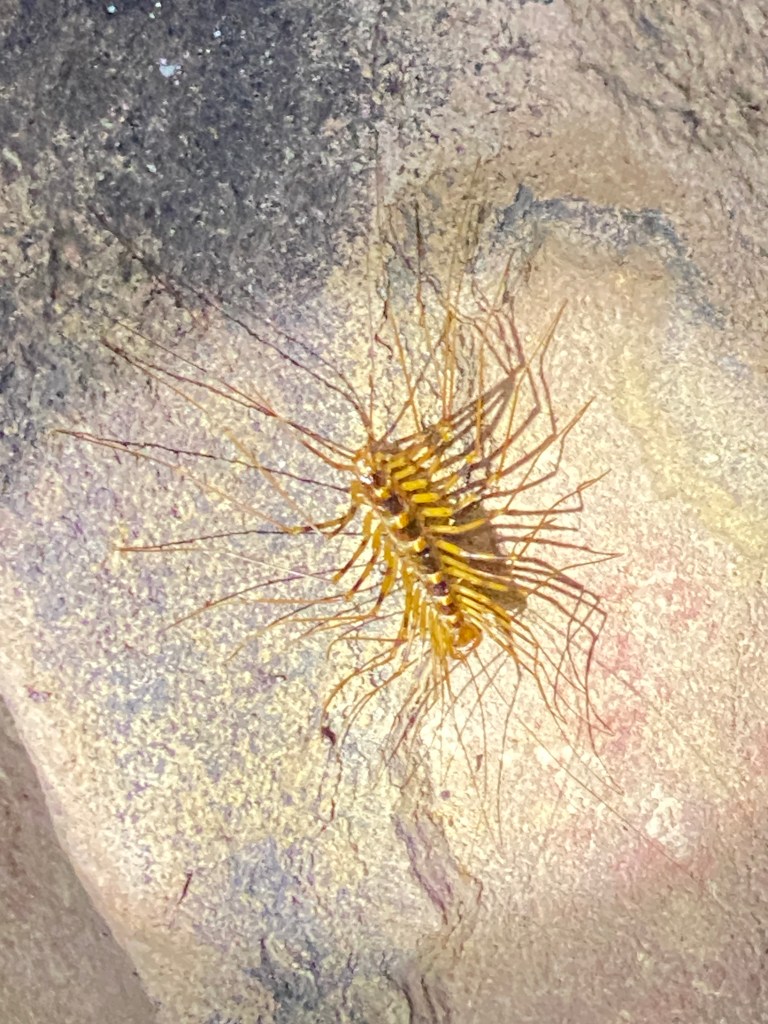
The kids were thrilled! I was ready to be out of the cave because often we had to walk hunched over, and there were a million bats. Sometimes you had to touch the rocks to maintain your balance, and then you touched guano. Sometimes we had to wade through knee-deep water. At one point in a huge cavern we all turned off our headlamps and just listened.
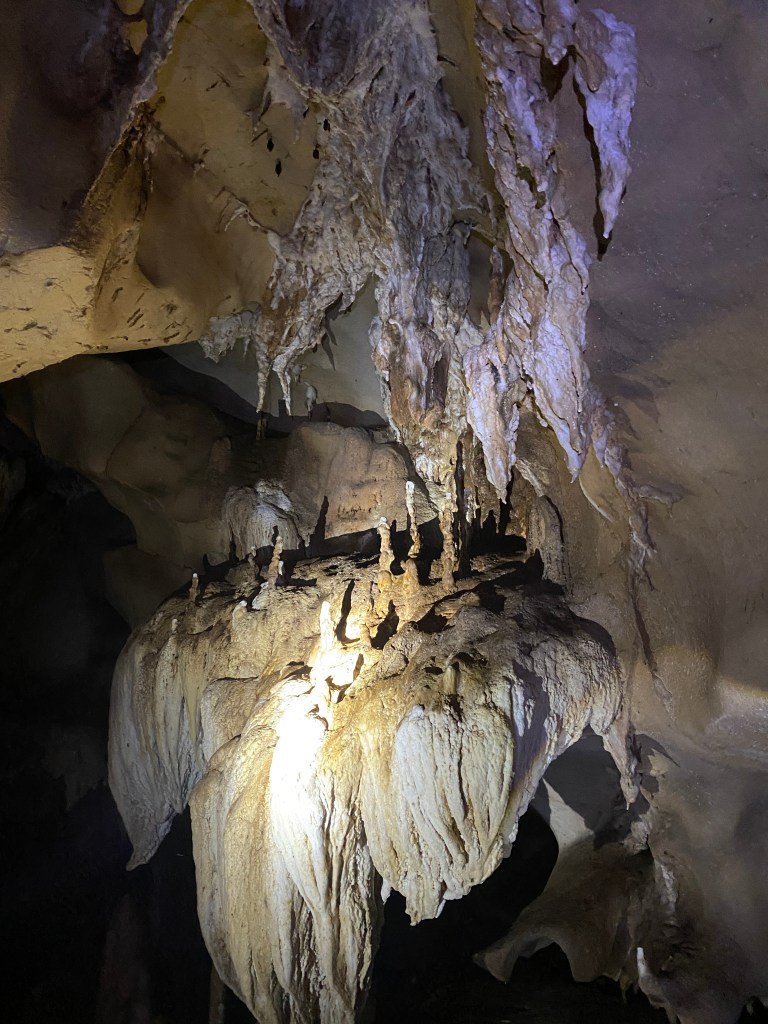
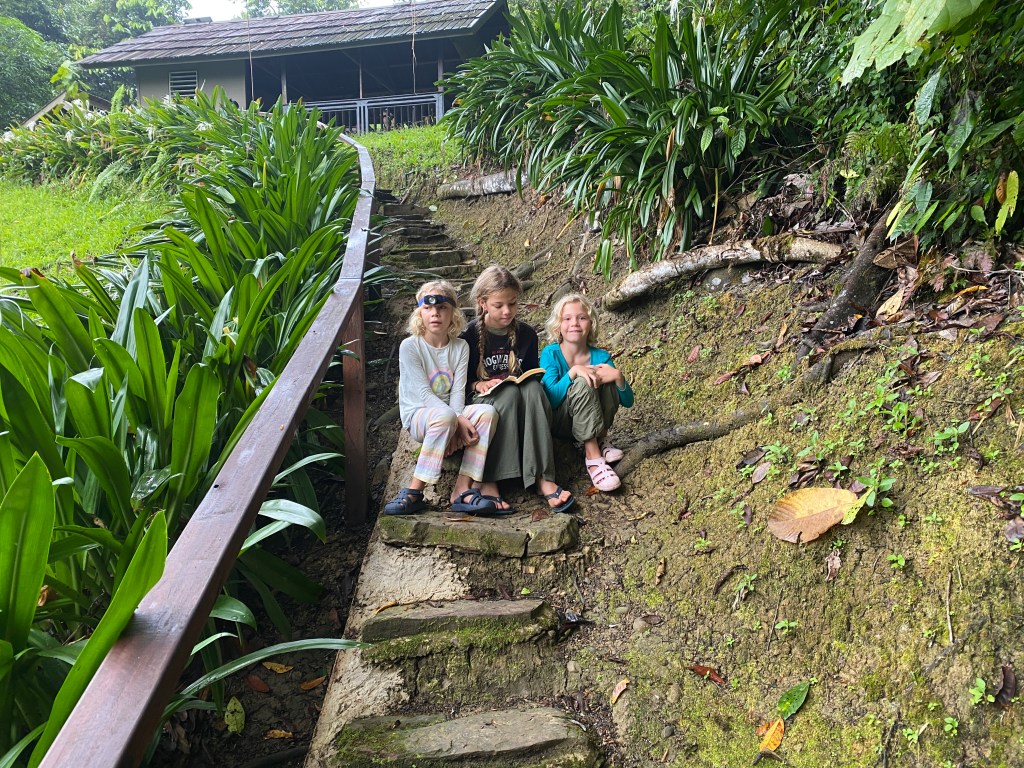
We then hiked back to the camp and rinsed off our feet to check for leeches. Nary a one on the guests, but our guide Eton had two. We had a delicious dinner. Tomu loved the venison especially, and declared “this lunch and dinner were my favorite meals ever outside of Mama’s cooking”. We all fell into our cots after a long day.
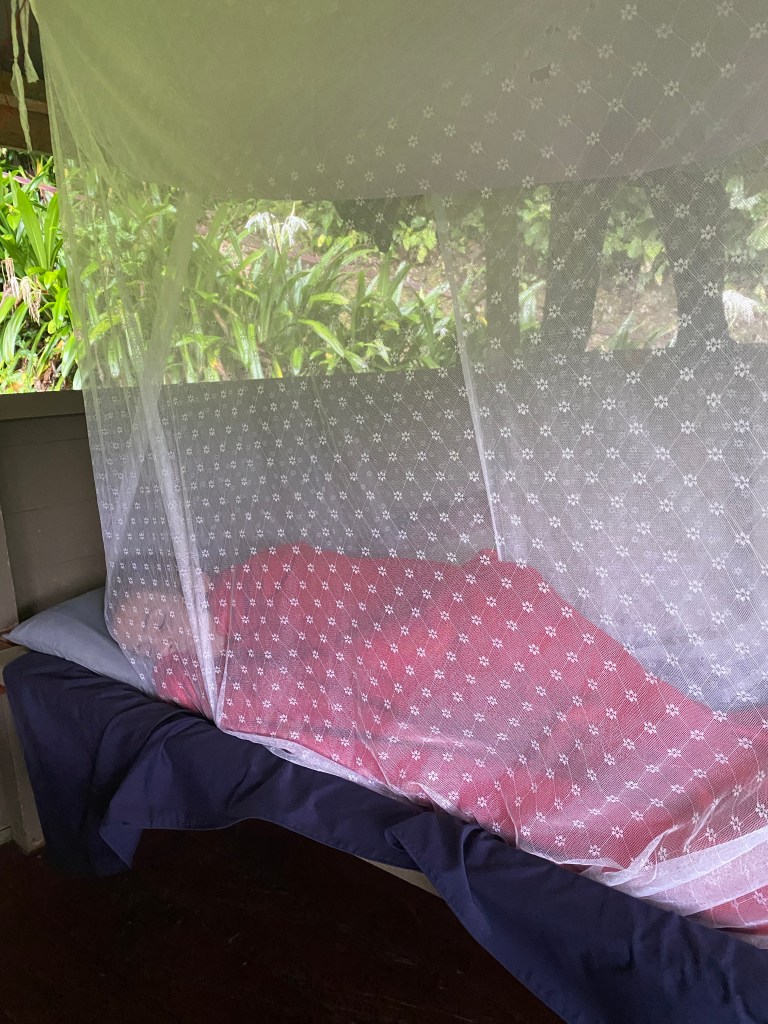
There was no air-conditioning, but it was much cooler in the jungle than in the marina in Kota Kinabalu, so we actually needed light blankets at night. What a nice surprise! And there weren’t many mosquitoes either.
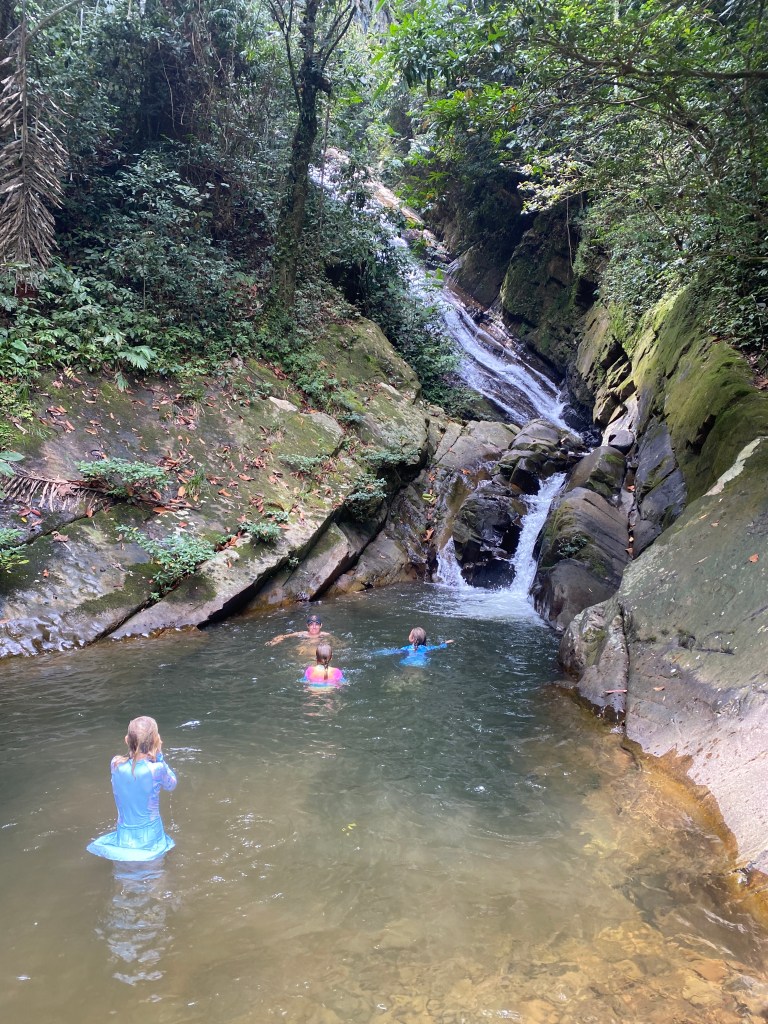
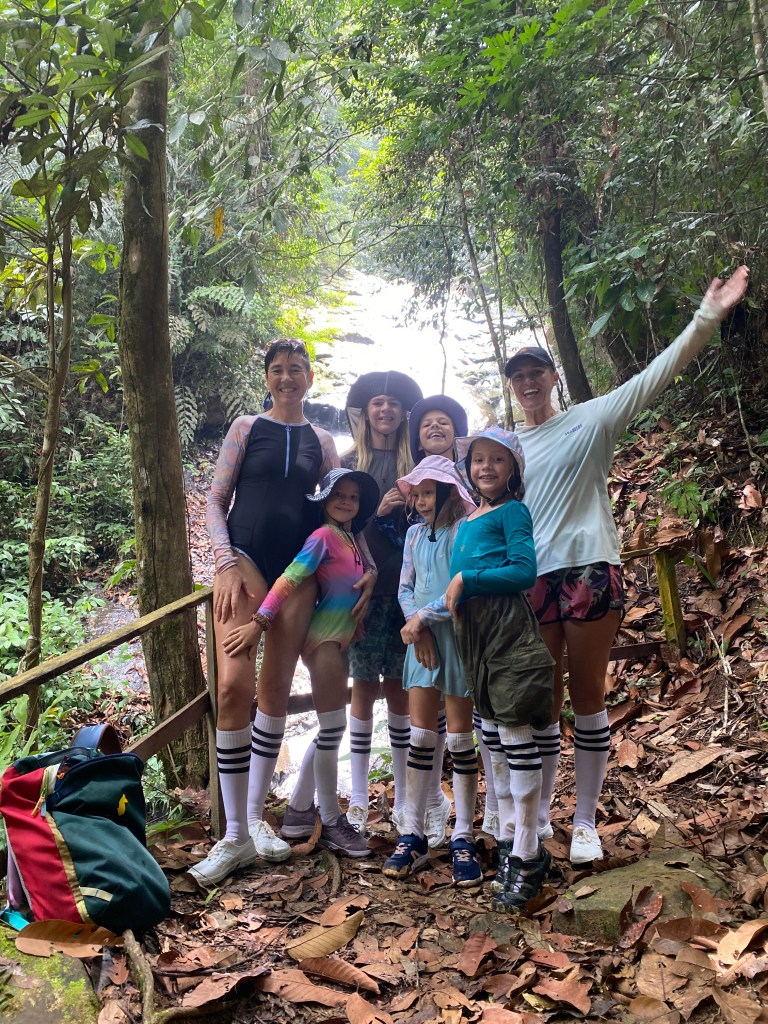
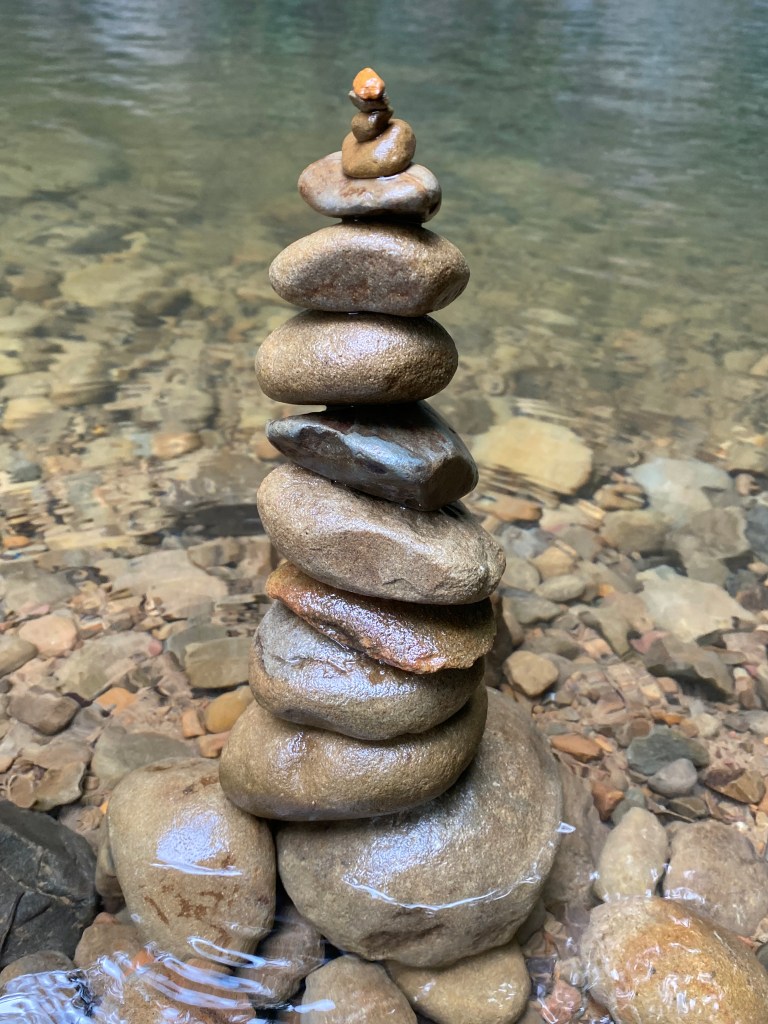
Next we drove about an hour, then hiked about 15 minutes to a waterfall. Tomu and Luz built rockpiles, we swam, and then had a yummy lunch.
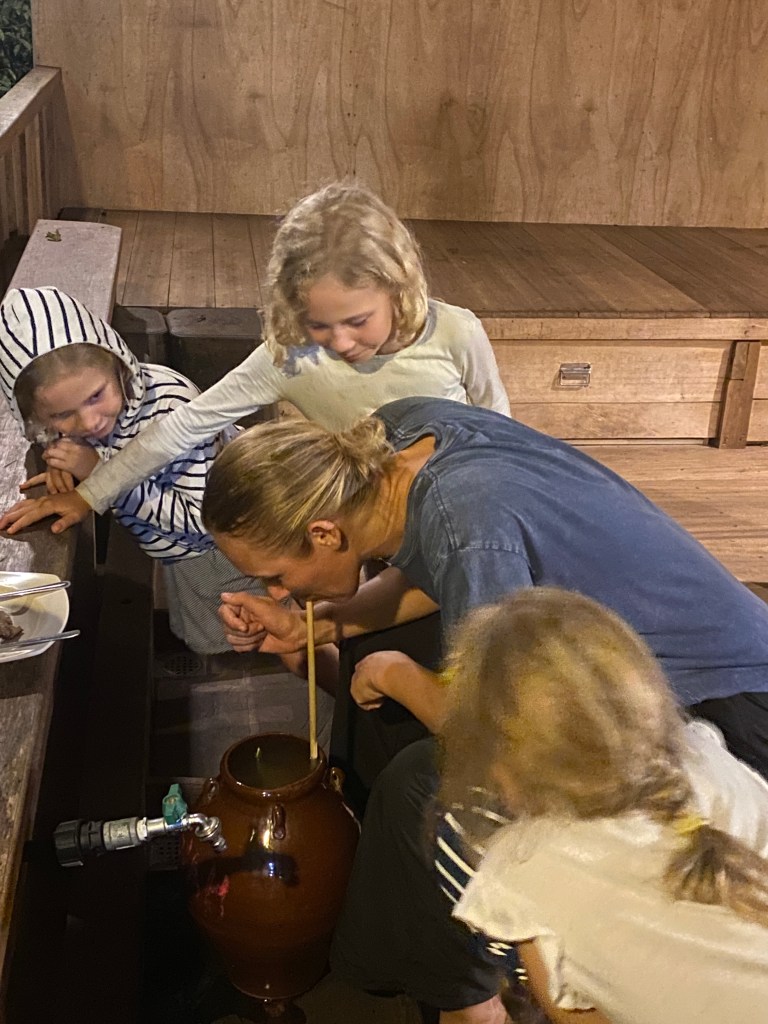
Then we drove to the village of Romol, where Virgil lives in the longhouse with 80 other people. We stayed in a comfortable guesthouse there, built for the ecotourism project. We had a few hours of downtime before dinner, so we played Codenames Pictures with Virgil. After another delicious meal, it was time to try the traditional rice wine, made in a big ceramic jar over a month’s time.
And then it was time for traditional Murut dancing. We joined in to the first dance and the last dance, called Magunatip, where you have to cross a line of four bamboo poles in the right rhythm or your ankles will get rapped! Jade and Luz loved dancing Magunatip, with no fear of getting hurt. I think we went to bed at 10 pm after all the dancing.
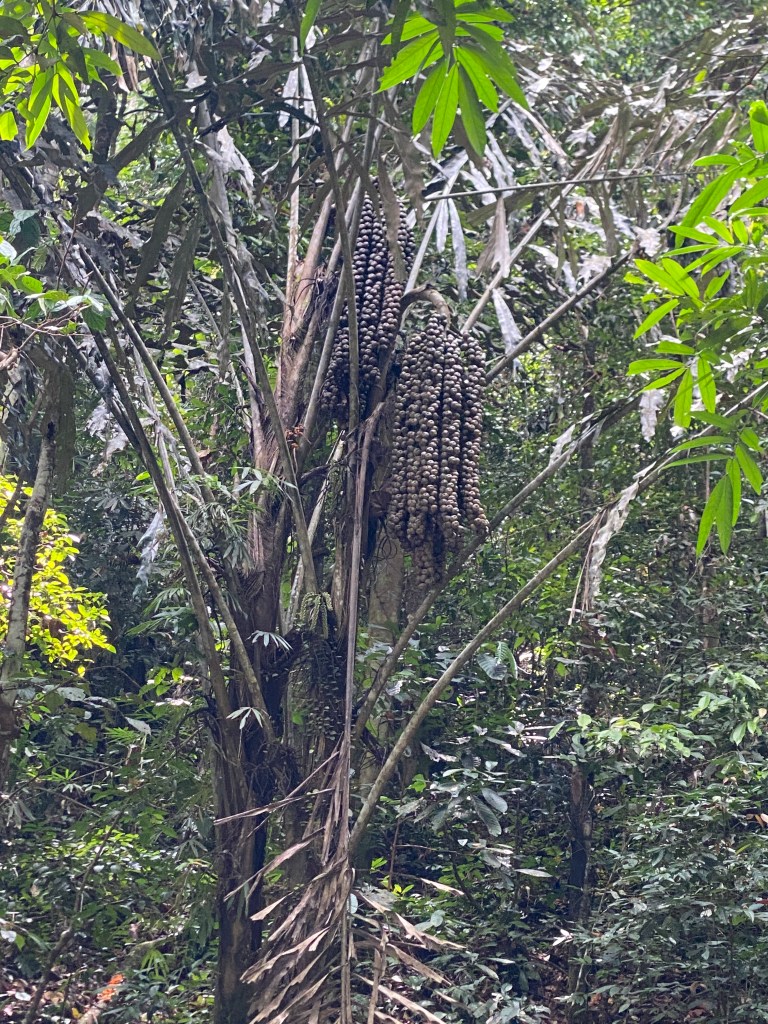
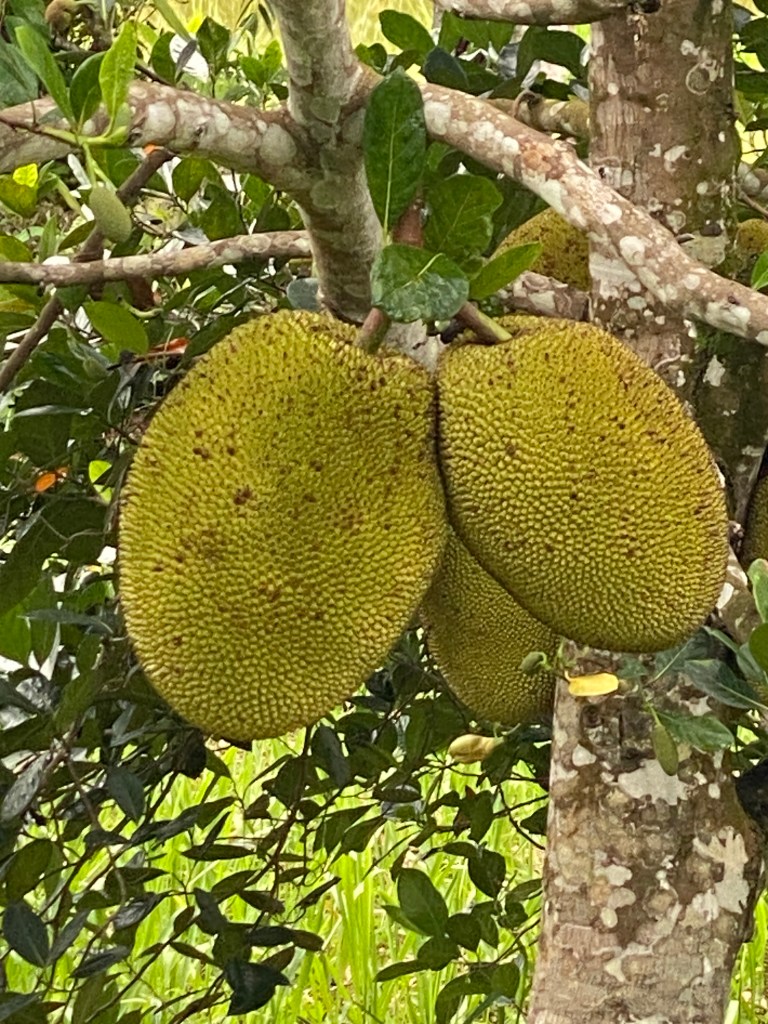
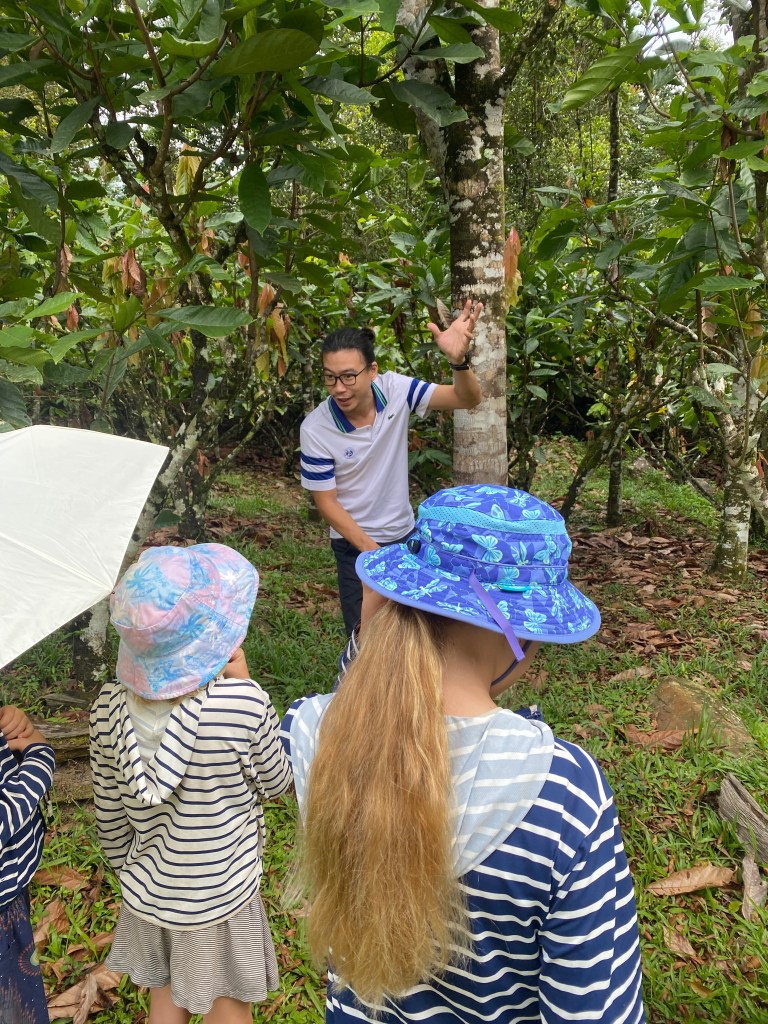
Our third and final day Virgil gave us a tour of his farm. We tried rambutan off the tree. We learned about the plans for the future: an agroforestry school for farmers who have one hectare or less of land and a vegetable garden to supply local schools.
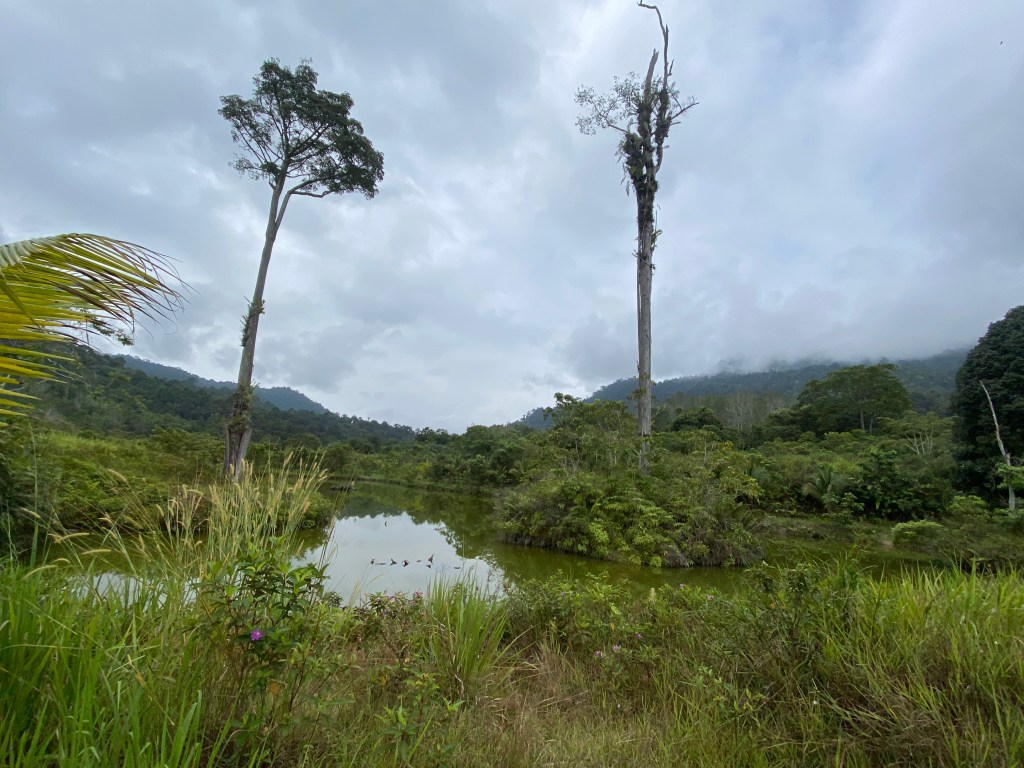
Then it was time for the long drive back to Kota Kinabalu. Virgil hugged us all before we got into the van. He gave some advice to the kids, “In my 35 years I have learned to love and protect two things in this life: the environment and your family”. I thought that was profound.
We had a fabulous trip, and it felt so good to be supporting a project like Orou Sapulot, where a local indigenous community is benefiting from our tourist dollars. My favorite part of the trip were Virgil’s stories. He is a born storyteller and a gifted orator. I asked him a question about the palm oil plantations that are all around Sabah…prefacing it with a disclaimer, that from an outsider’s perspective, you hear the palm oil plantations are bad because they cause destruction of the tropical rainforest, but what did he think? Virgil replied that this would take about 30 minutes to tell the story…here is the short version:
Back in the 1970’s when environmental consciousness was new, the UK and other Western countries said to Malaysia, “Can you stop cutting down the tropical rainforest?”
Malaysia said, “Yes, but can you give us some economic incentive?”
They responded, “No, that would be giving something for nothing” and created a blockade on Malaysian hardwood. This blockade, while well-meant, in effect caused more deforestation, as people needed to cut down more trees to make the same amount of money as before. Virgil said that Sabah has the most logging roads per hectare of land in the world.
The large-scale growth of palm oil plantations in Sabah accelerated sharply in the 1990’s and 2000’s. Virgil said that the palm oil plantations in Borneo are required to follow the RSPO (Roundtable on Sustainable Palm Oil) regulations. RSPO is a global, multi-stakeholder non-profit organization that develops and implements international standards for sustainable palm oil production. These regulations mean that palm oil plantations must provide corridors for animals like the Orangutan and Asian Elephant to use, and they must provide for the health, education, and religious needs of their employees. He told us that many tourists who come to the Kinabatangan River to see the elephants express dismay that there is a only a narrow corridor of rainforest along the river, with palm oil plantations all around; however, if you ask the residents of the area, it is much better with the palm oil plantations than it was before them, when the area was devastated by deforestation.
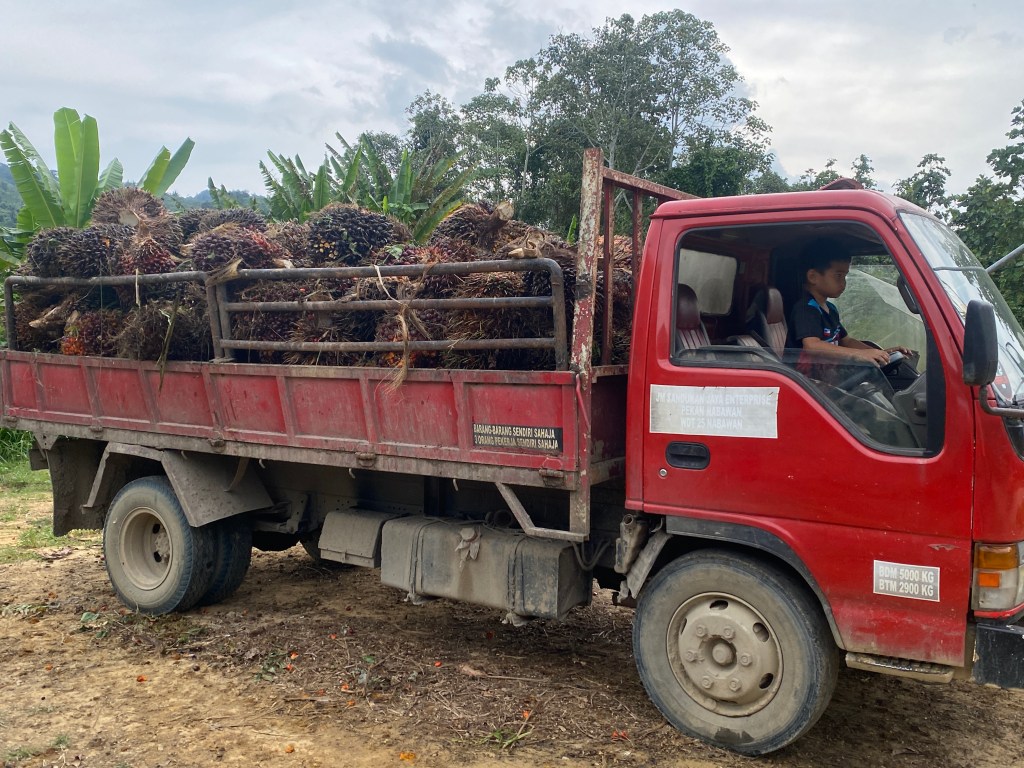
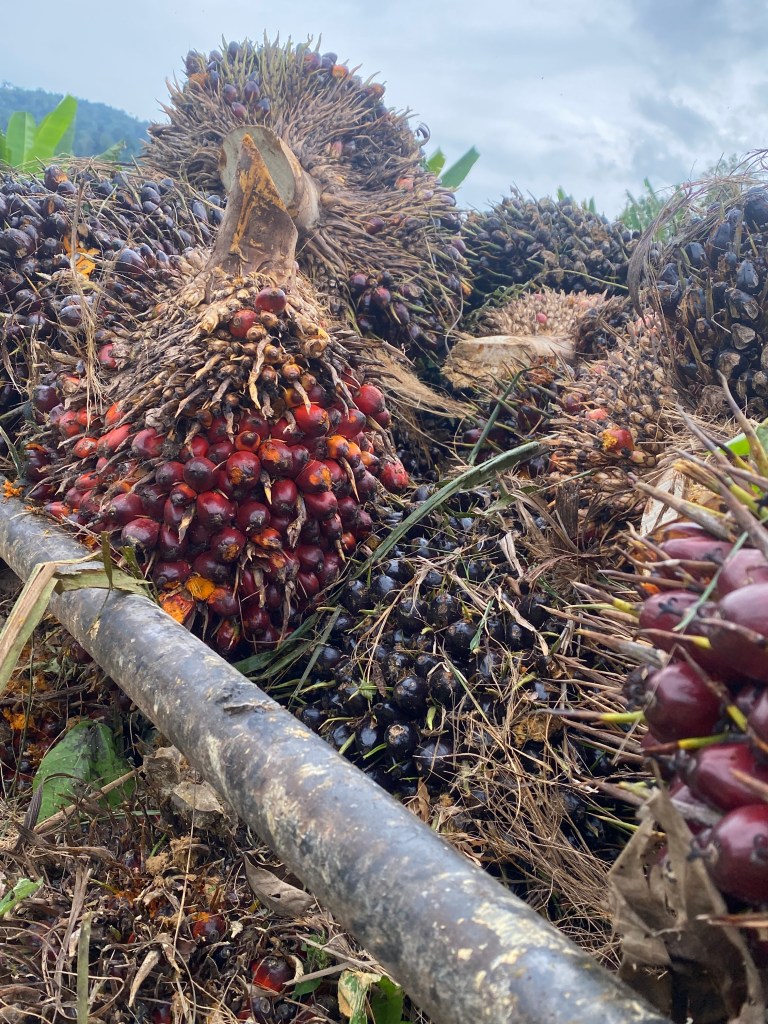
Virgil said that palm oil is the most efficient vegetable oil in the world — it produces 4 to 10 times more other oil crops per hectare. According to the WWF, palm oil produces 40% of the world’s vegetable oil demand while using less than 6% of the land dedicated to oil crops. I am convinced!
Finally, he illustrated his point about how palm oil plantations help with the stateless problem in Sabah by providing medical care with a story. Two brothers arrived on bicycles to the palm oil plantation where Virgil was working. The younger brother was bleeding profusely from his arm. Virgil got the doctor on the plantation to see him, and meanwhile spoke with his older brother. He learned that they were part of Sabah’s stateless population — folks whose ancestors came from the Philippines generations ago, but who are now neither citizens of Malaysia nor the Philippines, though they were born here, and often have never been to the Philippines. The boys were terrified of going to a public hospital, because they were stateless, and didn’t know what would happen to them. The plantation doctor said he couldn’t stop the bleeding, and arranged a way for the boy to be seen through the back door of the hospital. It was Virgil’s job to get the older brother to get in the ambulance. Virgil had to put a blanket over his head and force him in the ambulance, meanwhile the boy was kicking and biting him. Once in the ambulance, they sedated him. The younger brother received medical treatment at the hospital, and they boys went on their way.
Virgil told us his father Richard, the founder of the ecotourism project Orou Sapulot, walked six days to get to Keningau town in order to attend high school. There were no cars in the jungle then, and only one horse cart. His father met some Peace Corps volunteers in Keningau, who helped him find his way to study in the States. He eventually got a PhD in Tennessee. Virgil told us stories of his crazy cousin who tried to grab a python in the cave by the neck, then accidentally grabbed the tail and got bitten; stories of his uncle the healer, who speaks words and people heal (even over the telephone once!); stories of Murut people and the elephants, and the crocodiles…
We had an epic trip, and the best part were Virgil’s stories. He educated us all. When we got home to the boat, we went out to a nice dinner at a Japanese restaurant, and it was so cool to hear the kids telling Riki all of Virgil’s stories. They remembered even the smallest details. If you are ever in Malaysian Borneo, I can highly recommend Orou Sapulot Tours — book with them directly! 🙂


Leave a Reply